Key takeaways
- Choose one purchase question before filming.
- Show the exact product version and conditions relevant to a claim.
- Make commercial relationships understandable and check current local requirements.
- Keep the video, caption and product listing consistent.
A useful TikTok Shop product video helps a viewer judge whether an item fits their situation. Show what the product does, how it is used, and where its limitations matter. Entertainment can make the demonstration easier to watch, but it should not replace the evidence a buyer needs before choosing.
This guide concerns the content of a product demonstration. Shop eligibility, selling permissions, product categories, disclosures and available features vary by market and account. Check the current requirements for the exact seller or creator workflow you use rather than assuming that a general video tutorial establishes permission to sell.
Choose the purchase question before the camera angle
People rarely need every feature explained at once. They need the detail that resolves their present uncertainty. A commuter considering a travel mug may wonder whether it fits the cup holder, whether the lid is easy to clean or how the opening works while walking.
For an illustrative mug brand, choose one question for the first video: “What parts need cleaning after everyday use?” That question leads to a disassembly demonstration. A different video can address dimensions. Combining both with insulation, color options and a long founder story can make each answer harder to find.
TikTok’s Creator Search Insights announcement describes using searched topics to understand audience interests. It can help identify questions, but search interest does not prove that your product satisfies the need. The answer still depends on the actual item and its documentation.
Write the buyer’s question in the brief and keep it visible during filming. If a shot does not help answer it or establish necessary context, reconsider whether it belongs.
Define the exact product being demonstrated
Show the version, size or configuration relevant to the claim. A result obtained with one model should not be presented as applying to every item in a range. If accessories are shown but sold separately, make that relationship clear in the appropriate product and video information.
Use the product as it is actually supplied or explain any preparation. A cleaning demonstration should not hide a difficult disassembly step. A capacity demonstration should not imply a size that depends on an unusual packing method or an accessory the buyer does not receive.
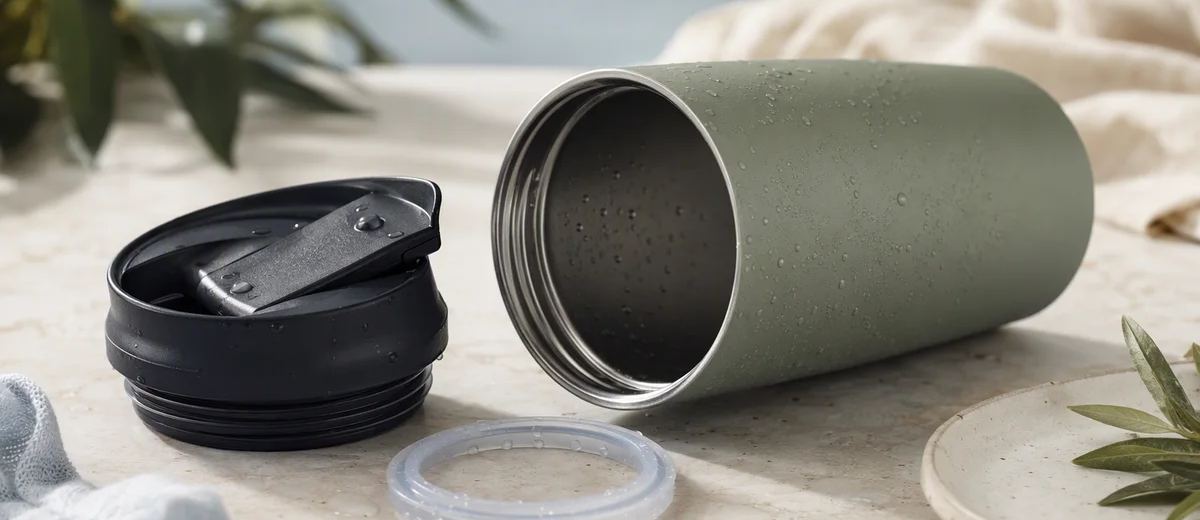
For the mug example, lay out the body, lid and removable seal according to the manufacturer’s instructions. Explain which parts can be removed and which should not be forced apart. If the instructions differ between versions, narrow the video to the version shown.
Keep a claim sheet beside the storyboard: statement, supporting source, product version and limitation. This small document prevents the caption from making a broader promise than the footage supports.
Show the conditions that affect the result
A demonstration becomes more useful when viewers can see enough context to interpret it. If size matters, include a clear scale reference and accurate dimensions where appropriate. If a result depends on time, temperature or preparation, explain the relevant conditions rather than presenting an unexplained transformation.
Do not turn an ordinary demonstration into a scientific claim. Showing one mug remaining upright on a desk does not prove it cannot spill in a bag. Showing a wipe removing one mark does not prove a cleaning product works on every surface.
Use careful language. “Here is how this lid comes apart for cleaning” matches the visible evidence. “The easiest mug to clean” introduces a comparison that requires much more support. Superlatives often create avoidable factual work without helping the buyer understand the product.
The brand voice guide can help retain a recognizable tone while making these distinctions. Precision does not require dry language; it requires the claim to match what you can show.
Film the decision, not only the beauty shot
A beauty shot establishes appearance. A decision shot reveals something the buyer needs to evaluate. Close-ups of a hinge, a seam, a closure or a cleaning step may be less glamorous, but they can answer an important practical question.
For the mug, film the seal being removed, the relevant surfaces being accessed and the parts being reassembled. Keep the hands and components visible. If an edit skips a step, make sure it does not create the impression that the step is unnecessary.
Build a concise sequence: question, product context, demonstration, limitation and next step. The pacing should follow the complexity of the action. Do not speed through the one movement viewers need to understand while spending most of the video on an introduction.
The content batching guide can help capture several distinct demonstrations efficiently. Keep separate briefs so filming several videos in one session does not turn them into near-identical feature lists.
Make the commercial relationship understandable
TikTok Shop’s creator information describes creator participation and earning commission through brand connections. That commercial context matters to how viewers interpret a recommendation. Follow the platform’s current disclosure controls and the requirements applicable to your relationship and location.
A gifted product, affiliate arrangement and paid commission can involve different facts. State the actual relationship clearly rather than using an ambiguous phrase that makes the endorsement appear independent. Do not invent a customer story or claim personal use that did not occur.
If a presenter is demonstrating a product on behalf of a brand, the content can still be useful. Its value comes from accurate evidence and honest framing, not from pretending that the commercial relationship does not exist.
When repurposing the video, review the disclosure and music context again. The cross-posting guide explains why a platform-ready export is not automatically ready for every other destination.
Connect the video to matching product information
Before publication, compare the video with the current product page. The model, included items, dimensions, care information and price context should agree. If a promotion expires, plan how the content will be reviewed so an old video does not continue making a current-sounding promise.
The next step should fit the question answered. A viewer who now understands cleaning may want the full care instructions or product specifications. Do not force an urgency message into every ending, especially when the buyer still needs to assess fit.
Use the caption generator to explore concise descriptions if useful. Edit out unsupported claims and make sure the final wording identifies the product accurately. A template cannot know what is included in the order or which current offer applies.
Include the unglamorous step when it changes the purchase decision. If the mug seal takes care to reinsert correctly, show that movement instead of cutting directly to the assembled lid. A buyer who values easy cleaning needs to judge both disassembly and reassembly. The same principle applies to charging, fitting, storage and maintenance: a complete demonstration shows the work required to get the benefit, not only the attractive moment after that work has already been done.
Learn from questions, returns and misunderstandings
After publishing, review what people still ask. Repeated questions about an omitted component may reveal that the demonstration needs another angle. Questions about a different use case may deserve a separate video. A correction should be addressed as an accuracy issue, not treated merely as engagement.
Where you have legitimate access to customer feedback, look for misunderstandings that the video may have created. Keep private order details out of public examples. A content team can learn from recurring themes without exposing an individual buyer.
Evaluate the video against its intended job. Views describe attention, while useful enquiries and fewer misunderstandings describe other outcomes. Do not claim that a demonstration caused sales unless your available measurement supports that attribution.
A strong product video leaves viewers better able to decide, including when the product is not right for them. That clarity can support more appropriate purchases and a more credible brand presence than a polished clip built around claims the product cannot consistently meet.
Sources
Frequently asked questions
What should a TikTok Shop product video show?
Show the product detail needed to answer a specific buying question, the conditions of the demonstration and any important limitation. Do not replace practical evidence with a broad feature list.
Can one demonstration prove a product always works?
No. A demonstration establishes only what it actually shows under the stated conditions. Wider performance or comparative claims require appropriate support.
Do affiliate creators need to explain their relationship?
Make the actual commercial relationship clear and follow current platform controls and applicable requirements. A useful demonstration does not need to pretend it is an independent customer review.
Can Caroush manage my TikTok Shop?
This article does not establish a Caroush Shop integration. Use verified Caroush planning and content tools where helpful, and confirm the exact publishing and commerce workflow separately.
About Garry
Gaurav Sapkota builds Caroush, a workspace for creating, scheduling, and publishing social content.