Key takeaways
- Treat purchase hesitation as an information need, including legitimate reasons not to buy.
- Require a verified answer and evidence owner for each objection.
- Choose demonstrations, diagrams, and updates around the specific uncertainty.
- Keep customer experience, product specifications, and performance evidence distinct.
Purchase hesitation often contains a reasonable question. Will this fit? Does it work with the version I own? What arrives in the box? Can I use it the way the demonstration suggests? Social content can answer those questions before a shopper reaches checkout, provided the answers are accurate and connected to the actual product.
Treat objections as information needs rather than resistance to overcome. Some answers will help the right person buy. Others will show that the product is unsuitable. Both outcomes can improve the quality of the decision and reduce avoidable disappointment.
Collect the question behind the hesitation
Start with support messages, product questions, return reasons, and sales conversations. Remove personal details before using them in a shared content brief. Preserve the wording that reveals what the customer could not determine.
Group questions by their practical subject. Fit concerns dimensions, sizing, or physical compatibility. Use concerns how the item works in a real situation. Value concerns what is included and how the alternatives differ. Fulfillment concerns delivery, availability, and returns. Evidence concerns whether a claim deserves belief.
Do not assume that the loudest question is the most common. A few visible comments may come from a narrow audience. Record the source and frequency only as observed, and check whether support or order data tells a different story.
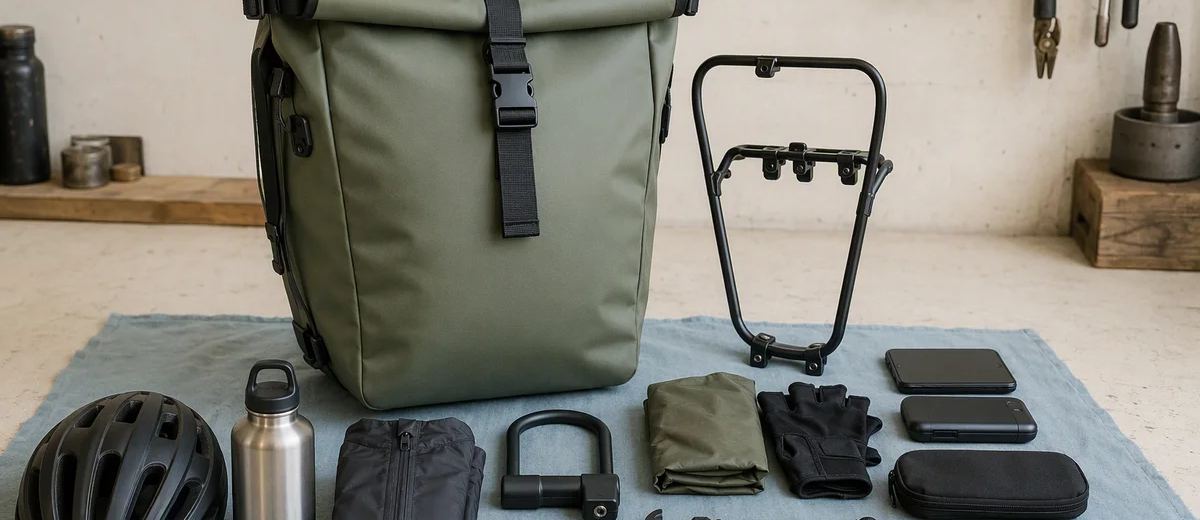
An illustrative business selling removable bicycle bags might hear “Will it fit my bike?” repeatedly. The useful underlying questions could involve rack width, attachment spacing, heel clearance, and carrying weight. One reassuring caption cannot answer all four accurately.
Build an objection record that requires proof
For each question, capture the exact uncertainty, the verified answer, the evidence needed, the limitation, and the destination for details. Assign an owner who can confirm product facts. This creates a working objection matrix without turning speculation into marketing copy.
For the bicycle bag, the record might say: “A customer cannot tell whether the mounting hooks fit their rack. Show the supported rail dimensions and how to measure them. Do not describe the bag as universal. Link to the compatibility guide and current product page.”
Google's Merchant Center product data specification provides a useful reference for accurate product attributes and variants in Google listings. Its requirements apply to those listings, but the same factual discipline helps your social explanation stay aligned with the product being sold.
Avoid using customer reassurance as a substitute for technical evidence. “Most people love it” does not resolve a mounting limitation. If the team cannot verify an answer, the next action is product investigation, not a more confident caption.
Match the format to the uncertainty
A dimension question benefits from a measurement demonstration. A multi-step setup benefits from a sequence. A comparison benefits from consistent criteria. A delivery question may need a concise update with a link to current information, because a polished evergreen video can become inaccurate quickly.
Use Instagram placement guidance to choose a format based on the explanation, not on a belief that one format always receives better reach. A short video can show the bag attaching to a rack. A carousel can show the checks someone should perform before ordering.
A readable carousel layout is especially useful for diagrams with measurements. Give each slide one question, keep labels legible, and do not hide exceptions in tiny text. The carousel splitter can prepare separate slides from an already designed panorama; it cannot confirm compatibility claims.
Create a five-piece education sequence
For the illustrative bicycle bag, the following sequence addresses separate decisions. It is an example of content planning, not evidence of a tested sales result. Each piece should remain understandable when encountered alone.
Piece one: check the mounting system
Show the attachment points and the measurements the buyer needs. Use the actual product version and a representative rack. State the supported range from verified specifications and explain where a measurement should be taken.
The next action is checking the buyer's equipment, not ordering immediately. Link to a compatibility reference that can be updated if the product changes. A person with an incompatible rack should learn that before purchase.
Piece two: demonstrate clearance
A bag can attach correctly and still interfere with the rider's heel or another accessory. Show the relevant placement check in a controlled demonstration. Explain the conditions and avoid implying that one bicycle proves suitability for every frame and riding position.
If safe installation depends on instructions, say so and direct the viewer to them. Social content should supplement the official setup material rather than replacing essential safety information with a quick visual impression.
Piece three: show what the capacity means
Place a realistic set of objects in the bag and identify the example as illustrative. Distinguish usable space from an advertised volume specification when the shape affects packing. Do not hide objects outside the camera frame while implying everything fits.
Show the limits as well as the successful arrangement. A bulky item may fit differently from several smaller ones. A visual demonstration helps readers judge their own needs without claiming one packing pattern represents every commute.
Piece four: explain care and weather limits
Use the product's verified care instructions and performance claims. Water-resistant and waterproof are not interchangeable promises. If the product has limitations, state them plainly and avoid a dramatic demonstration that suggests a stronger claim than the evidence supports.
This piece can answer a high-stakes objection while discouraging unsuitable use. It is valuable even when it persuades someone to choose a different product for their conditions.
Piece five: make the order clear
Show the components included with the selected version, optional accessories, and the route to current availability and delivery information. Separate stable product facts from changing fulfillment details. A caption can point to the current page without making a permanent arrival promise.
End with a useful question such as “Which part of your rack setup is unclear?” Route personal order questions privately. The goal is to identify unresolved information, not pressure every commenter to buy.
Use customer evidence without exaggerating it
A customer demonstration can make a use case concrete, but one person's experience does not establish universal performance. Preserve the context, get appropriate permission, and avoid editing a qualification out of a quote.
The FTC's endorsement guidance explains the need for honest endorsements and clear disclosure of relevant connections. If the person received payment or something of value, assess and disclose that relationship appropriately. A natural-looking video is still an endorsement when the circumstances make it one.
Do not turn an exceptional result into the expected outcome. A bag surviving one storm does not establish a waterproof rating. Product specifications, appropriate testing, and representative evidence serve different jobs; keep those differences visible in the content brief.
Check whether uncertainty actually decreased
Review repeated questions, support conversations, relevant clicks, returns information, and available store behavior. A post receiving fewer comments might have answered the question clearly, or it might simply have reached fewer people. Interpret the evidence together.
Your social content audit can record which objections each asset addresses, when the facts were checked, and what needs revision. Keep a link from the content record to the product version so a specification change triggers an update.
Do not claim a revenue improvement from an isolated before-and-after comparison when pricing, stock, traffic, or seasonality also changed. Start with the observable outcome: the explanation is accurate, the destination matches, and customers can perform the intended check.
The strongest objection content gives the buyer a better decision process. It shows how to assess fit, demonstrates the actual product, and acknowledges limits. That approach is more durable than a series of persuasive claims that only work while nobody asks for details.
Sources
Frequently asked questions
Which purchase objection should become content first?
Prioritize uncertainties that cause unsuitable purchases or repeatedly block a relevant decision. Use observed questions and support evidence rather than assuming the loudest comment represents everyone.
Should objection content mention product limitations?
Yes. Clear limitations help buyers judge fit and prevent an example from implying universal suitability. They are part of an accurate explanation, not an optional footnote.
Can a customer video prove a product claim?
It can illustrate that person’s experience, with permission and appropriate disclosure. It does not automatically establish general performance, technical compatibility, or typical results.
How do I know whether the content reduced objections?
Review recurring questions and support evidence alongside relevant traffic and order behavior. Note other changes and avoid treating an uncontrolled before-and-after sales difference as proof of causation.
About Garry
Gaurav Sapkota builds Caroush, a workspace for creating, scheduling, and publishing social content.